
Have you ever wondered what determines the price of a product? Is it the cost of manufacturing, the desired profit, or the product’s perceived value? Retailers understand that finding the perfect balance between value and cost is crucial in attracting customers and out-competing other products. With the advancement of AI and machine learning, businesses now have access to powerful tools for data analysis and technology that can aid in this process.
Amazon is an excellent example of a company that changes the prices of its product’s multiple times a day. This is made possible by price optimization technology, which can predict market trends and provide businesses with valuable insights. By using this technology, businesses can attract more customers, increase their revenue, and gain a larger market share.
Oracle has been at the forefront of helping retailers tap into the market. Oracle Retail Promotion and Markdown Optimization version 23 offer the capability to optimize promotions and markdowns, aiming to increase in-season sell-through and potentially boost revenue and gross margin. Oracle Retail Offer Optimization enables retailers to forecast the demand of different customer segments and identify the customer segment with the highest likelihood of redeeming marketing offers.
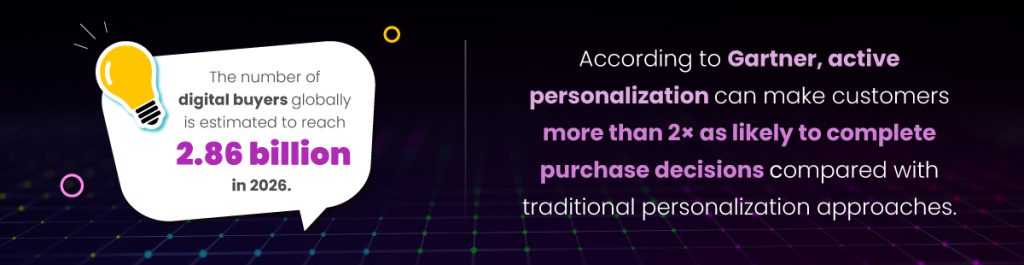
As retailers move away from blanket promotions and towards more targeted pricing strategies, personalization becomes a critical consideration.
This raises a key question: how can retailers personalize offers to different customer segments using AI?
Retailers use AI to group customers into meaningful segments using signals such as purchase history, price sensitivity, channel preference, and response to past offers. Oracle Retail Offer Optimization supports this by forecasting demand at the segment level and identifying which segments are most likely to redeem specific offers. This helps retailers tailor offers by segment (and even by location) without relying on broad, one-size-fits-all promotions.
Before we unravel the new technology, let’s dive into the problem that most retailers face.
Puzzle of Pricing Strategy
A survey data from Pew shows that 22% of Americans shopped online in 2000; today, it is nearly 80%. The convenience of buying for customers has meant new operational challenges for retailers.
Here are some of the pain points they face:
- Handling elevated product return rates: Online channel experiences a 30% return rate, contrasting with a 10% return rate in physical stores, shows an analysis by Oracle.
- Addressing inventory imbalances throughout the supply chain: Customers may purchase from one region or channel while returning items through a different channel, creating discrepancies in inventory.
- Optimizing pricing strategies for promotions and markdowns: The frequency of price changes has intensified due to increased promotions and markdowns.
- Delivering personalized customer experiences: Utilizing past purchase behavior and current search criteria to offer tailored recommendations that resonate with individual customers.
- Expanding assortment size and diversifying assortment across different locations: Online retailers have unrestricted shelf space, providing customers with a broader range of product options.
Instead of struggling with these problems, e-commerce retailers can harness advanced analytics and generate value by aligning pricing and promotions through optimal price settings and well-designed promotional strategies.
Why Price Optimization is a Box of Opportunities
Inflationary pressures make it challenging for retailers to maintain narrow profit margins. To ensure product sales, profitability, and market share, it is crucial to determine the optimal price. Unfortunately, many retailers lack comprehensive data, making it difficult to make informed pricing decisions. Retailers must navigate pricing choices with limited information, which can impact sales and margins.
Retailers can use advanced analytics and machine learning to combine different datasets and determine the best pricing strategy. This approach is helpful for online and physical stores because comparison shopping is now easily accessible online. This presents a vast potential market for retailers to optimize their prices and thrive.
According to McKinsey’s analysis on pricing and promotions, several innovative e-commerce retailers have used highly differentiated analytics processes to increase revenue and profit by three to five percentage points.
Additionally, they have also experienced a boost in customer satisfaction and loyalty.
What Makes Oracle Retail Stand Out in the Market?
Oracle has been recognized as a Leader in the IDC MarketScape: Worldwide Retail Price Optimization Solutions Vendor Assessments in the past. This list is made up of price optimization vendors who specialize in the retail industry. Oracle earned its spot on the list due to its high-quality pricing capabilities, which cover strategic pricing across multiple channels and use advanced technologies like machine learning and AI.
According to Ananda Chakravarty, Vice President of Research at IDC Retail Insights, “Price optimization is going through significant changes due to advancements in AI/ML technology. With automation, prioritization, and scalability of large amounts of pricing data, AI/ML technology is transforming price optimization into a new stage. The utilization of AI/ML technology allows the consideration of more data than ever before, leading to a new era of price optimization.”
Oracle Retail Regular Price Optimization is an Oracle Retail Analytics and Planning family component. It provides a complete range of services that cover assortment planning, category management, and lifecycle pricing. Despite being interdependent, each application within the suite is modular, which allows customers to begin at any point and expand as needed. Oracle Retail Regular Price Optimization offers retailers a return on investment within three months.
It’s also fair to ask: what is the typical ROI for implementing Oracle Retail regular price optimization and how does it compare to other vendors?
ROI depends on pricing maturity, data readiness, and rollout scope, but Oracle Retail Regular Price Optimization is designed to deliver measurable returns within about three months. When comparing vendors, retailers should evaluate time-to-value, forecasting accuracy at scale, the ability to operationalize price changes, and how seamlessly the solution integrates with the broader Oracle retail ecosystem, rather than relying on a single benchmark number. pdates based on up-to-date data, and delivering targeted price recommendations at the segment level.

Features of Oracle Retail Promotion and Markdown
Oracle Retail Promotion and Markdown offer powerful features that allow retailers to make optimal pricing decisions, engage customers with personalized offers, streamline execution, and leverage advanced technologies for accuracy and scalability.
Here are some of the key features:
- Integrated Lifecycle Price Optimization: Models demand with returns, providing accurate revenue projections, gross margin amounts, and gross margin percentages.
- Virtual Inventory Allocation: Accounts for inventory imbalances caused by returned merchandise, ensuring effective allocation across stores.
- Joint Optimization of Promotion and Markdowns: Enables setting target sell-through at various points during the product’s life cycle, optimizing promotion and markdown strategies for maximum impact.
- Engaging Customers with Targeted Offers: Supports retailers in engaging customers across various channels, delivering personalized and contextual offers. Offers separate life cycle pricing for promotions, markdowns, and targeted offers, allowing retailers to innovate at the pace of their customers while considering loyalty data maturity.
- Streamlined Execution: Incorporates price and promotion plans, projected receipts, and returns for seamless execution of pricing strategies. High automation and exception-driven processes, along with what-if optimizations, simplify decision-making for pricing and promotions.
AI-Powered Precision: Utilizes artificial intelligence, machine learning, and optimization functionalities within Oracle Retail’s data science infrastructure. Improves the precision and expandability of pricing choices by employing cutting-edge technologies.
Boost from Oracle Retail Offer Optimization
The features mentioned above and Oracle Retail Offer Optimization can help retailers determine optimal pricing recommendations for promotions, markdowns, and targeted offers.
Promotions and markdowns are applied at the location level, while targeted offers can be personalized for individual customers based on location data. The timing and depth of these strategies play a crucial role in inventory management throughout the product’s life cycle.
Oracle Retail Offer Optimization proves beneficial in various scenarios, including balancing inventory levels during full-price and clearance periods, maximizing overall gross margin, evaluating in-season performance, weekly recommendation updates based on up-to-date data, and delivering targeted price recommendations at the segment level.
How Aspire Systems Can Help
Aspire Systems with its vast experience of system upgrades and strong collaboration with Oracle, can play a crucial role in implementing Oracle Retail Price Optimization for retailers using legacy systems and older versions of Oracle.
Our experts thoroughly analyze the retailer’s pricing strategies, processes, and systems, assessing the requirements and objectives for implementing the solution. Working closely with the retailer, we design a tailored solution that aligns with specific pricing needs and business goals. The experts configure the Oracle Retail Price Optimization software, integrating it with existing retail systems such as ERP, CRM, and POS.
Take the Smarter Route to Ramp Up Revenue
Price optimization is about keeping pace with constant changes. As you update features, branch out into new markets, and gain customers, it’s smart to revisit pricing to review if it’s still at the optimal point.
For retailers to improve their pricing strategies and achieve growth in revenue, profitability, market share, and customer satisfaction, it’s essential to have real-time access to inventory, orders, demand, pricing, promotions, and customer insights.
Having a comprehensive platform that integrates various data sources and facilitates advanced analytics. With this platform, retailers can customize pricing strategies on a product-specific level, which allows them to set regular prices based on target margins, competitive pricing alignment, or preferred pricing relationships in different markets.
Additionally, they can optimize promotion and markdown strategies while ensuring consistent pricing across all touchpoints for a seamless omnichannel customer experience.

- Unlock Revenue Potential with Oracle’s Price Optimization Solution: Maximizing Profits and Customer Satisfaction Through AI-Driven Pricing Strategies - March 10, 2026
- Accelerate Retail Operations with Oracle MFCS through Aspire Systems Data Integration Tool - December 4, 2023
- Data Migration Made Easy: Retailers Can Breeze Through Oracle v23 Upgrade with Aspire’s Solution - October 30, 2023
 Write to Us