
AI in Software Testing: The Future of Software Quality
Share this Article on


 TL;DR
AI is changing how software is tested, but faster test generation and execution do not automatically translate into better software quality. Many organizations struggle to realize AI's full potential because testing remains disconnected from development workflows, business risks, and release decisions. This article explores what prevents AI-powered testing from delivering enterprise-wide value and how engineering leaders can build a more intelligent, integrated quality engineering model.
The world of software development is in a constant state of flux, propelled by the relentless pursuit of innovation and efficiency. In this dynamic landscape, Artificial Intelligence (AI) Testing has emerged as a game-changer, disrupting and reshaping various aspects of the software development lifecycle. One area where AI is making a particularly profound impact is software testing. Traditionally, software testing has been a labor-intensive and time-consuming process, often reliant on manual test case creation and execution. This approach, while effective, struggles to keep pace with the ever-increasing complexity and velocity of modern software development.
However, Artificial Intelligence in testing is poised to revolutionize software testing, transforming it from a tedious task into a streamlined and data-driven process. By utilizing its powerful capabilities in automation, pattern recognition, and predictive analytics, AI is ushering in a new era of software quality.
Imagine a future where AI can meticulously analyze code, user behavior, and historical test data to automatically generate comprehensive test suites. These AI-powered test suites can then be meticulously executed with pinpoint accuracy, identifying bugs and root causes faster than ever before. Furthermore, AI in software testing can delve into the depths of complex data sets, predicting areas with a high risk of failure and enabling testers to prioritize their efforts effectively. The benefits extend beyond just speed and efficiency.
AI can also analyze user interactions with the software, uncovering potential usability issues that might slip through the cracks in traditional testing methods. This translates to a more robust and user-friendly software experience for end-users. As we delve deeper, we'll explore the specific techniques employed, the diverse use of cases across various testing domains, and the exciting future trends that promise to further revolutionize the way software is tested and delivered.
What are the benefits of AI in software testing?
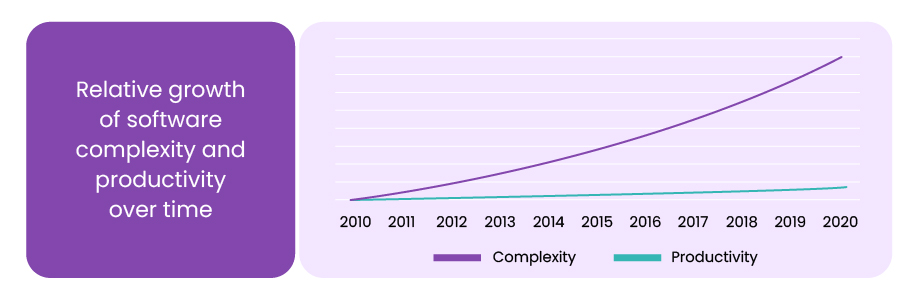
Artificial Intelligence (AI) has become a game-changer, impacting various aspects of the software development lifecycle (SDLC). One area witnessing a profound transformation driven by AI is software testing. The traditional software testing approach struggles to keep pace with the ever-increasing complexity of modern software, A recent McKinsey study on embedded software in the automotive industry shows that software complexity has increased by a factor of four in the last ten years.
According to the study “State of Continuous Delivery Report” by the CDF, 31.3% of developers deploy codes between once per week and once per month, with another 27.3% deploying every month to six months. Notably, only 10.8% of developers achieve high-performance status, deploying code multiple times per day.
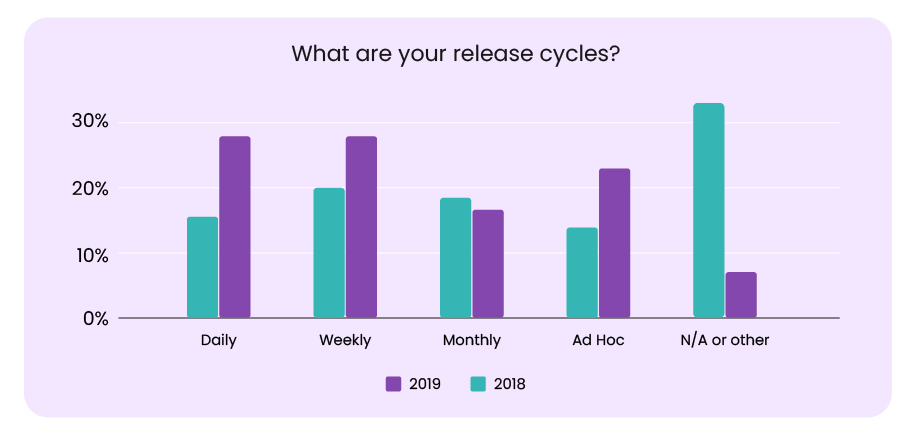
Another survey report by CNCF published in 2019 also revealed that release cycles are accelerating, driven by the rise of DevOps, CI/CD tools, and agile methodologies. Those with daily release cycles increased from 15% in 2018 to 27%, and weekly release cycles have increased from 20% to 28%. Monthly releases decreased slightly from 18% to 16%.
However, AI is revolutionizing software testing, offering a plethora of benefits that enhance efficiency, accuracy, and overall software quality. Let's delve into the data-driven advantages and Benefits of AI in software testing
- AI automates repetitive tasks, a major bottleneck in traditional testing. Studies show that up to 80% of regression testing activities can be automated with AI-powered testing frameworks, freeing up valuable human resources resulting in a 50% reduction in testing times, allowing development teams to release software faster.
- AI analyzes data to identify gaps in test coverage; a critical aspect often missed manual testing. This leads to a more comprehensive testing approach, encompassing a wider range of scenarios and potentially uncovers 20% more defects.
- AI meticulously execute tests with high precision, minimizing the human error factor often associated with manual testing. This translates to more reliable test results and a reduction in false positives that can waste valuable development resources.
- AI can analyze vast amounts of data, including code, logs, and user behavior patterns, to identify subtle anomalies and potential problems that might escape human testers. This empowers teams to address issues proactively before they become critical bugs.
- AI tools leverage historical data on defects and user behavior to predict areas with a higher likelihood of failures. This allows testers to prioritize test cases by risk, focusing their efforts on areas with the highest potential impact.
- AI-powered tools continuously learn and improve, eliminating the need for manual script updates, a time-consuming task that can consume up to 50% of a tester's time.
- AI can analyze complex test logs to pinpoint the root cause of defects with greater precision. This expedites debugging and reduces the time it takes to resolve issues, potentially leading to a 30% reduction in debugging time.
- The self-learning capability of AI allows it to adapt to changing codebases and user behavior, ensuring the suite remains relevant and effective over time.
Apart from these benefits, it's important to recognize that AI is not just about automation. Its analytical capabilities offer a powerful advantage in software testing,
AI can analyze test results and identify patterns to optimize the test suite. It can recommend removing redundant tests and suggesting new tests to improve test coverage. This data-driven approach ensures the test suite remains efficient and effective over time, potentially leading to a 20% reduction in test suite size.
AI can also analyze complex test logs to not only identify defects but also pinpoint their root causes with greater accuracy. This not only expedites debugging but also provides valuable insights into the underlying code issues, enabling developers to implement more effective fixes.
AI can leverage historical data on defects, user behavior, and code complexity to prioritize test cases based on risk. This ensures that critical areas of the application receive the most thorough testing, optimizing the use of testing resources, and ensuring a higher quality final product.
How does artificial intelligence impact software testing?
1. Existing workflows can limit AI's impact
AI is revolutionizing software testing by impacting it in several keyways, offering significant advantages in terms of efficiency, accuracy, and overall software quality. Here is a comparison of manual Software testing and Software testing with AI, which shows the impact of Artificial intelligence in the realm of software testing:
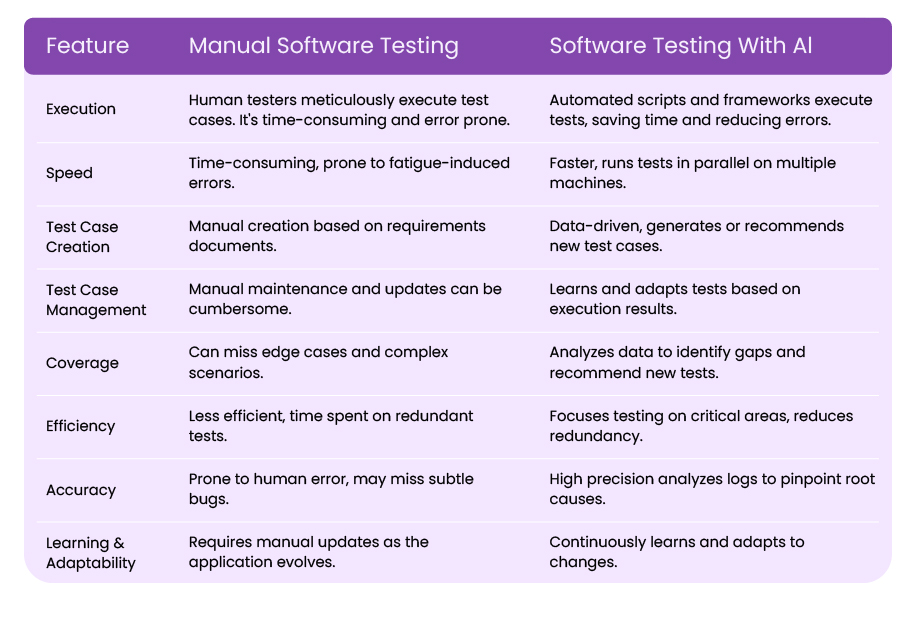
Apart from these differences, the major difference lies in the utilization of human expertise. While AI excels at automation and data analysis, manual testing expends more manpower in comparison to AI.
While manual testing has served us well, AI is ushering in a new era of efficiency, accuracy, and proactive problem-solving. As AI's capabilities continue to evolve, we can expect even more transformative advancements, paving the way for a future where software quality is not just a goal, but an unwavering guarantee.
What are Advantages of AI in software testing?
Traditional software testing methodologies often struggle with keeping pace with rapid development cycles and achieving comprehensive coverage. Here's where Artificial Intelligence (AI) steps in, offering a transformative approach to software testing. AI empowers organizations to achieve superior quality through automation, enhanced accuracy, and a data-driven testing strategy, ultimately leading to a competitive edge in the ever-evolving software landscape. AI-powered testing offers a compelling solution, optimizing the process in several ways. Here are some of the advantages of utilizing AI in software testing:
- Accelerated Execution: AI automates repetitive tasks, enabling execution of a high volume of test cases in significantly less time. This translates to faster feedback loops and quicker time-to-market.
- Enhanced Accuracy: Prone to human error, manual testing can lead to inconsistencies. AI meticulously execute tests, minimizing errors and ensuring highly reliable results.
- Focus on Strategic Testing: By automating the mundane, AI frees up valuable tester expertise. Testers can then dedicate their time to more strategic tasks, such as designing innovative test strategies and exploring complex scenarios.
- Self-Healing Capabilities: AI can adapt to test scripts automatically as the application evolves. This ensures tests remain relevant even when UI elements change, eliminating the need for frequent manual updates.
- Accessibility for All: NLP-based testing allows anyone to contribute to robust testing. With plain English statements, even those without coding experience can automate routine workflows, fostering a collaborative testing environment.
- Seamless CI/CD Integration: AI seamlessly integrates with CI/CD pipelines, enabling automated testing throughout the development lifecycle. This continuous feedback loop ensures software stability and facilitates rapid deployment.
- Detailed Reporting: AI test automation tools generate comprehensive reports that highlight defects with precision. This facilitates clear communication with developers, leading to efficient issue resolution.
- Unparalleled Test Coverage: AI leverages data-driven approaches to achieve comprehensive test coverage in record time. This level of thoroughness is simply not feasible with manual testing methodologies. By embracing AI Software testing, organizations can unlock a future of exceptional software quality, streamlined development processes, and a significant competitive advantage.
What tasks can AI enhance in software testing?
Software testing involves many repetitive tasks, making it a prime candidate for AI automation. AI excels at learning patterns and automating processes, particularly those that involve:
- Field-Specific Test Case Creation: AI can analyze different field types (e.g., email address, phone number) and automatically generate relevant test cases, streamlining test creation.
- Change-Driven Test Execution: Upon detecting code modifications, AI can perform risk assessments and select the most appropriate test cases to ensure functionality remains intact before release.
- Intelligent Test Planning: AI can analyze new features and suggest test case creation strategies, optimizing the overall testing plan.
- Workflow Automation Extrapolation: By observing the automation of one similar workflow, AI can learn to automate all workflows of that type, saving significant time and effort.
- Self-Healing Test Maintenance: Minor code changes, like renaming a component, can break existing automated tests. AI-powered self-healing can automatically rectify these issues, maintaining test suite integrity.
- UI Component-Based Test Generation: AI analyzes UI components to generate test cases that comprehensively assess all user interface functionalities.
- Performance and Load Testing Efficiency: AI can generate realistic loads for performance and load testing, streamlining the process.
- Release-Specific Test Selection: Based on code changes and new features, AI can intelligently select the most relevant test cases to be executed before different types of releases.
- Automated Test Plan Generation: AI can analyze project requirements and historical data to automatically generate comprehensive test plans, expediting the testing process. By leveraging AI for these repetitive and pattern-based tasks, software testing teams can achieve greater efficiency, accuracy, and ultimately, deliver higher quality software.
What are the future trends in AI and ML for software testing?
AI is transforming software testing with automation, early issue detection (shift-left testing), and user-friendly test creation tools. Here are some of the popular AI software testing trends:
- AI-powered QA: Machine learning empowers AI to learn from data, identify patterns, and predict potential issues. This translates to faster testing cycles and improved accuracy.
- Enhanced User Experience (UX) Testing: AI delves into user behavior and preferences, offering valuable insights into user interactions and pain points for a more personalized testing approach.
- Predictive Bug Detection: AI leverages its analytical prowess to forecast potential software bugs, enabling proactive resolution and reducing post-release issues.
- Natural Language Processing (NLP) for Test Automation: AI interprets test case requirements written in plain language, automating scenario creation and boosting test coverage.
- Performance Optimization with AI: AI analyzes performance data to identify bottlenecks and optimize performance. Additionally, it can simulate user behaviors under peak loads, ensuring smooth software operation.
- AI-powered Security Testing: By recognizing security vulnerability patterns and simulating cyberattacks, AI strengthens software security posture.
- Chatbot-Driven UI Testing: AI-powered chatbots mimic human interaction with software, facilitating automated UI testing, and streamlining the process.
- DevOps and Agile Integration: AI fosters continuous testing and rapid update cycles, seamlessly integrating with DevOps and Agile development methodologies.
- Visual Testing with AI: AI automates the comparison of visual elements across software versions, ensuring consistent user experience by detecting visual anomalies.
- Voice-Enabled Testing: AI tests voice interfaces, guaranteeing accurate voice command responses and smooth user interaction.
Future trends of AI: The AI-Driven Future of Software Testing
The future of AI in software testing promises even greater advancements. We can expect:
- Enhanced Integration: AI systems will become more interconnected, enabling cross-functional testing across various departments.
- Focus on AI Ethics: Ethical considerations in AI development will receive greater emphasis to ensure unbiased and responsible testing practices.
- Sophisticated AI Models: Development of advanced AI models tailored for complex software environments will further unlock the potential of AI in testing, leading to even more benefits across diverse industries. By embracing these cutting-edge AI trends, software testing is poised for a paradigm shift, leading to faster, more accurate, and highly reliable software for everyone.
How can AI techniques be used in software testing?
Here's a look at how AI can be leveraged throughout the testing process:
- Automated Test Generation: AI can analyze specifications, code, and historical data to automatically create test cases, saving time and effort while ensuring comprehensive coverage.
- Smarter Regression Testing: AI prioritizes test cases based on recent code changes, focusing on testing efforts on areas most likely to be impacted, optimizing regression testing cycles.
- Predictive Analytics: By analyzing historical data, AI can predict which software areas are more prone to defects, allowing testers to proactively allocate resources and prioritize testing.
- Natural Language Processing (NLP): AI understands natural language, enabling testers to create test cases and analyze requirements of documents in a more intuitive way.
- Defect Prediction: Leveraging code changes, commit history, and other data; AI can predict potential defects before they arise, allowing for proactive issue resolution.
- Automated Test Execution: AI-powered tools can execute tests across various platforms and devices, mimicking user interactions and monitoring system performance for a more comprehensive evaluation.
- Realistic Test Data Generation: AI generates diverse and realistic test data, ensuring software is thoroughly tested under various scenarios and conditions.
- Log Analysis Made Easy: AI analyzes log files to identify errors, exceptions, and patterns that might indicate software issues, helping testers pinpoint defects quickly.
- Continuous Testing Integration: AI seamlessly integrates with CI/CD pipelines, automating testing at each development stage for continuous feedback and early defect detection.
- Automated Bug Triaging: AI analyzes incoming bug reports, categorizes them, and assigns them to the appropriate team for faster resolution.
- Enhanced Security Testing: AI analyzes code and simulates potential attacks to identify security vulnerabilities, improving software resilience against cyber threats.
- Performance Optimization: AI simulates load, stress, and performance scenarios to assess software behavior under different conditions, ensuring optimal performance. By incorporating these AI techniques, organizations can streamline software testing, achieve higher test coverage, deliver higher-quality software, and ultimately, improve user satisfaction and expedite software releases.
AI in software testing, Take Manual to Magical
Artificial Intelligence testing can be considered a harbinger of the future of Software Testing. As we see the waves made by the usage of AI in software testing industry and the trail of transformations that lie in its wake. It is evident that we cannot see the future of Software testing without AI being an inaugural part of Software Testing. As the quote goes,
Software testing and automation belong together for a symbiotic workflow. The future of software testing is undeniably bright with AI at the helm. By embracing these transformative AI trends, we can expect a paradigm shift: faster, more accurate, and highly reliable software for everyone. As AI continues to evolve, we can anticipate even more sophisticated models tailored for complex software environments, further unlocking the potential of AI in testing across diverse industries. The future of software development is undoubtedly intertwined with the intelligent power of AI in software testing, paving the way for a future where exceptional software quality is not just a goal, but an unwavering guarantee.
For more insights on AI in Software Testing and to efficiently utilize Artificial Intelligence testing for your needs, check out Aspire System's software testing services along with the various other AI-based services that we offer. Join us in our innovative journey by getting in touch with us. Embrace the AI transformation and improve your success's potential.
Unleash the power of AI: Learn More About AI in Software Testing
FAQs
1. How does AI improve test case generation?
AI analyzes requirements, application code, user behavior, historical defects, and existing test cases to generate relevant scenarios, identify coverage gaps, and recommend additional tests.
2. What is AI-powered self-healing test automation?
Self-healing automation uses AI to detect changes in application elements or workflows and adapt test scripts or locators to minimize test failures caused by application updates.
3. How does AI help with defect prediction?
AI analyzes historical defect patterns, code changes, application complexity, and test results to identify areas that may be more prone to failures, helping teams prioritize testing.
4. What are the challenges of implementing AI in software testing?
Common challenges include poor data quality, integration with existing tools, unreliable AI-generated tests, governance concerns, explainability, security, and the need for human validation.
5. What are the emerging trends in AI software testing?
Emerging trends include agentic testing, autonomous test execution, predictive quality analytics, AI-driven test maintenance, natural language test creation, and continuous validation of AI systems.
6. How can organizations get started with AI in software testing?
Organizations can start by assessing testing maturity, identifying repetitive and high-impact testing activities, evaluating AI tools against real use cases, establishing governance, and measuring improvements in quality, coverage, effort, and release speed.
In This Article
- AI's Impact on Software Testing
- Benefits of AI in Testing
- AI vs. Manual Testing
- AI-Enhanced Testing Tasks
- AI Testing Techniques
- Future Trends in AI Testing