How Do You Evaluate Coexistence Validation for Oracle EBS and Fusion Cloud?
TL;DR Coexistence validation for Oracle EBS and Oracle Fusion Cloud ensures data integrity and process continuity across hybrid ERP environments by executing…
Read moreAspire Systems


TL;DR Coexistence validation for Oracle EBS and Oracle Fusion Cloud ensures data integrity and process continuity across hybrid ERP environments by executing…
Read more
The primary strategy for mitigating Oracle Fusion implementation risks centers on replacing legacy lift-and-shift methods with standard cloud-native workflows. Enterprises…
Read more
Evaluating post-go-live support for Oracle Fusion requires assessing both immediate hypercare stabilization and long-term performance tuning. The most effective approach establishes a governance framework…
Read more
Migrating from E-Business Suite and PeopleSoft to Oracle Fusion Cloud ERP requires evaluating whether to execute a phased rollout, a big…
Read more
Managing remote Oracle Fusion consultants requires structuring Statement of Work (SOW) deliverables around verifiable technical milestones rather than billable hours….
Read more
Integrating Oracle Fusion across Finance, HCM, SCM, and third-party endpoints requires a centralized integration governance framework that standardizes payloads and…
Read more
TL;DR Change management in Oracle Cloud deployments aligns human workflows with continuous software updates to prevent operational disruption. This framework…
Read more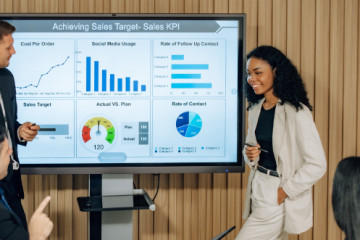
A realistic Oracle Cloud ERP implementation timeline for a mid-sized company ranges from 6 to 12 months. This duration depends…
Read more
TL;DR The most effective way to assess an Oracle Fusion partner is to evaluate their module-specific implementation history rather than relying on their…
Read more
TL;DR Oracle Fusion implementation budget overruns stem primarily from legacy data migration complexities, excessive system customization, and internal resource constraints….
Read more
TL;DR The most effective Oracle Fusion Cloud ERP data migration strategy relies on rigorous master data cleansing, automated mapping logic,…
Read more
Why do some Oracle Fusion Cloud ERP deployments conclude in six months while others drag on for eighteen? The timeline…
Read more
TL;DR Finalizing an Oracle Fusion SCM deployment requires validating specific technical thresholds before cutover. Organizations must resolve data dependencies, lock down…
Read more
TL;DR The best rollout approach for Oracle Fusion depends on enterprise risk tolerance and integration complexity. A Big Bang deployment…
Read more
The success of an Oracle Fusion HCM implementation depends on strict adherence to a configuration-first deployment strategy, rigorous data cleansing…
Read more
TL;DR An Oracle Fusion Finance implementation restructures legacy financial data into a cloud-native, unified ledger system, enabling real-time global consolidation…
Read more
The success of an Oracle Fusion implementation depends entirely on user adoption, as software deployed without workforce alignment generates zero…
Read more
Introduction: ERP’s Role in the Enterprise Growth Story For enterprises operating in multiple geographies, managing thousands of SKUs, vendors, or…
Read more
Introduction: ERP Scalability Is Not a Feature—It’s a Growth Enabler For modern enterprises, ERP is more than a back-office tool—it’s…
Read more
In the dynamic landscape of enterprise solutions, deploying Oracle Fusion ERP Cloud Projects is a pivotal step towards efficiency, innovation,…
Read more
There are three clear drivers to cloud migration – data protection and security, data modernization, and the performance and cost…
Read more Write to Us